Page 1 of 1
The Chess Memory Palace
Posted: Thu Oct 19, 2023 11:11 am
by John Upham
Richard James has reviewed
The Chess Memory Palace
by John Holden
from Amazon Publishing
https://britishchessnews.com/2023/10/19 ... ry-palace/
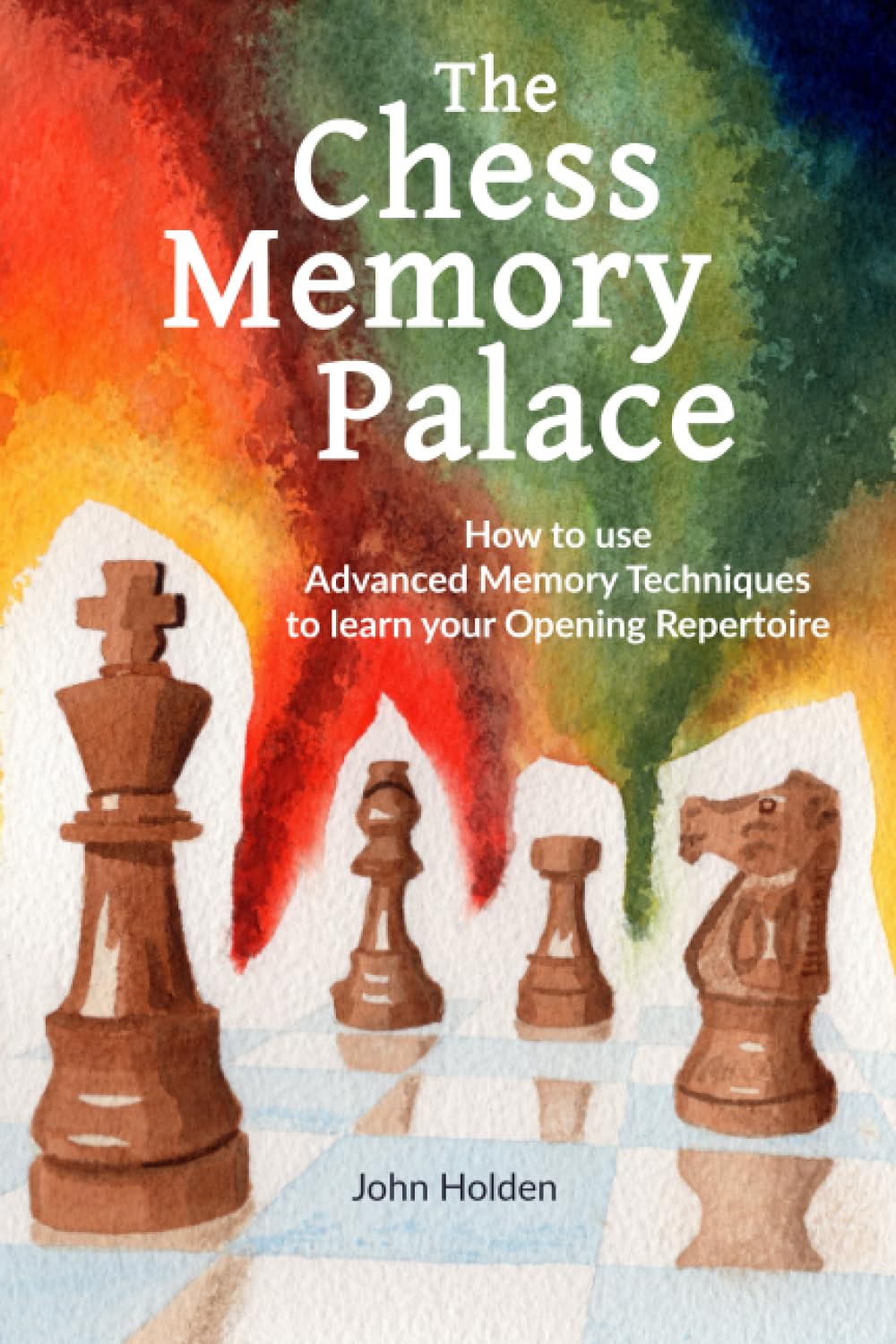
- The Chess Memory Palace, John Holden, Amazon, ISBN-13 : 979-8370251146
- _______________________________________________________________71DraBdSCeL._SL1500_.jpg (160.86 KiB) Viewed 3566 times
Re: The Chess Memory Palace
Posted: Thu Oct 19, 2023 5:11 pm
by Matt Mackenzie
Maybe this forum's resident sleuths might try to pin down who the author actually is?
Re: The Chess Memory Palace
Posted: Thu Oct 19, 2023 5:33 pm
by Roger de Coverly
I think a significant number of players think of openings in terms of chunks.
An example might be
with the White position being one chunk and the Black position being another. There's no particular reason to remember stories as a guide how to get there.
It's only when the position is really sharp that precise move orders can matter. Even there if your tactical eye and sense of position is good enough, you can make it up, unless there's a hidden nasty waiting outside your search depth.
Re: The Chess Memory Palace
Posted: Thu Oct 19, 2023 6:55 pm
by John Upham
Matt Mackenzie wrote: ↑Thu Oct 19, 2023 5:11 pm
Maybe this forum's resident sleuths might try to pin down who the author actually is?
The email address of John A. Holden that asked
BCN to review the book at
https://johnden.org/
You could always ask John what his real name is I suppose.
Re: The Chess Memory Palace
Posted: Tue Oct 31, 2023 10:11 pm
by John Holden
Hello, I am the author. Many thanks to Richard for writing this review.
I didn't include biographical details because I wanted the book to stand on its content. I am not notable in the world of chess or memory. I am merely an enthusiast. However, sometimes being an enthusiast in two fields lets you make new connections. In my opinion, the Chess Memory Palace is the best mnemonic system for chess published so far.
In chess, having a strong memory gives a direct competitive advantage. Of course, understanding and pattern recognition are supreme — but literally memorising opening moves is important too. Using a memory palace can greatly expand your memory, while reducing review time (after an initial investment to learn the technique). It is like reading your repertoire while at the board.
I believe a strong player would gain a significant edge by using a memory palace to learn their opening repertoire. There's a lovely review on Amazon from a lady using the Chess Memory Palace to help memorise the content to teach chess classes. I’m hoping to soon hear reports of people using memory palaces in tournaments.
Re: The Chess Memory Palace
Posted: Wed Nov 01, 2023 1:12 am
by Roger de Coverly
John Holden wrote: ↑Tue Oct 31, 2023 10:11 pm
In chess, having a strong memory gives a direct competitive advantage. Of course, understanding and pattern recognition are supreme — but literally memorising opening moves is important too.
.
With sixty years experience, I'm unconvinced that memorising opening moves is that important. Knowing what's been played before can be useful, but making it up as you go can be an equally valid method and relatively safe outside of positions that need a knowledge of detailed obscure tactics. It also has the advantage that the opponent cannot rely solely on memory.
Re: The Chess Memory Palace
Posted: Thu Nov 02, 2023 3:01 am
by MJMcCready
Roger de Coverly wrote: ↑Wed Nov 01, 2023 1:12 am
John Holden wrote: ↑Tue Oct 31, 2023 10:11 pm
In chess, having a strong memory gives a direct competitive advantage. Of course, understanding and pattern recognition are supreme — but literally memorising opening moves is important too.
.
With sixty years experience, I'm unconvinced that memorising opening moves is that important. Knowing what's been played before can be useful, but making it up as you go can be an equally valid method and relatively safe outside of positions that need a knowledge of detailed obscure tactics. It also has the advantage that the opponent cannot rely solely on memory.
As anyone can tell you, a common mistake 'club players' make, is to memorize opening theory only to then make sub-optimal moves, or put differently, moves that are not in keeping with the opening because they don't have a feel for the position and don't really understand it once they have left the opening phase. The whole idea of treating openings as a separate entity is dubious in itself. I assumed it was common knowledge that concepts key to openings have to be explored in depth far beyond the parameters of what is commonly classified as the opening phase, pawn chains and piece placement for example. To suggest that learning openings is a question of memorization constitutes a lack of expertise in my opinion. Only very weak players fall for that one. But since chess theory, as a literary genre has been decadent for decades, its understandable why someone might make a purchase here even though that rather cheap sell above is rather off-putting.
Re: The Chess Memory Palace
Posted: Sat Nov 18, 2023 7:14 pm
by John Holden
I agree with the comments above, that you need to understand your moves, the ideas, the middlegame plans etc. However I maintain that it is also beneficial to memorise the moves themselves.
The relationship between memory and understanding is a subtle one (both in chess and in other subjects). For anyone interested, I have set out my thoughts at length in a blog post (and also in chapter 7 of the book).
https://johnden.org/whymemoriseopenings