Page 1 of 1
Using AI in general for Chess History Tasks
Posted: Tue Oct 13, 2026 5:02 pm
by GrahamStuart
Following on from John Saunder's posts on
viewtopic.php?f=27&t=15406 I decided to look if I could use AI for producing historic Portsmouth Chess League results. Although the results are recorded on the ECF rating site these do not include the final tables, cross tables or other additional information.
To my eyes this was a successful exercise, and I managed to produce 20+ years of results to include on my website. Particularly getting AI to produce Player Performance (I left out rating performance) was a success. This is not something I have been able to complete for a website, but AI was able to take the data and produce this.
I have added details on the high level process
https://hampshirechesshistory.co.uk/ai- ... s-results/ but some examples of the what was produced can be found here. Take into account, this is my first time using AI and I am sure better results can be completed.
https://hampshirechesshistory.co.uk/pdc ... ivision-1/
https://hampshirechesshistory.co.uk/pdc ... ivision-2/
https://hampshirechesshistory.co.uk/pdc ... ivision-1/
Re: Using AI in general for Chess History Tasks
Posted: Mon Oct 19, 2026 1:36 am
by James Pratt
I just used AI for details of the 1973-75 World Title Cycle which has always fascinated me. It made three crashing errors giving me the wrong Candidates pairings, even leaving out Byrne completely. On all occasions, when corrected, it apologised but basically is was almost like guess work, not historical research, which surprised this newcomer to this bludgeoning oracle. Must I go travel to Delphi for better answers or even dust off my Wade/Blackstock/Kotov Batsford?
James
Re: Using AI in general for Chess History Tasks
Posted: Mon Oct 19, 2026 9:30 am
by NickFaulks
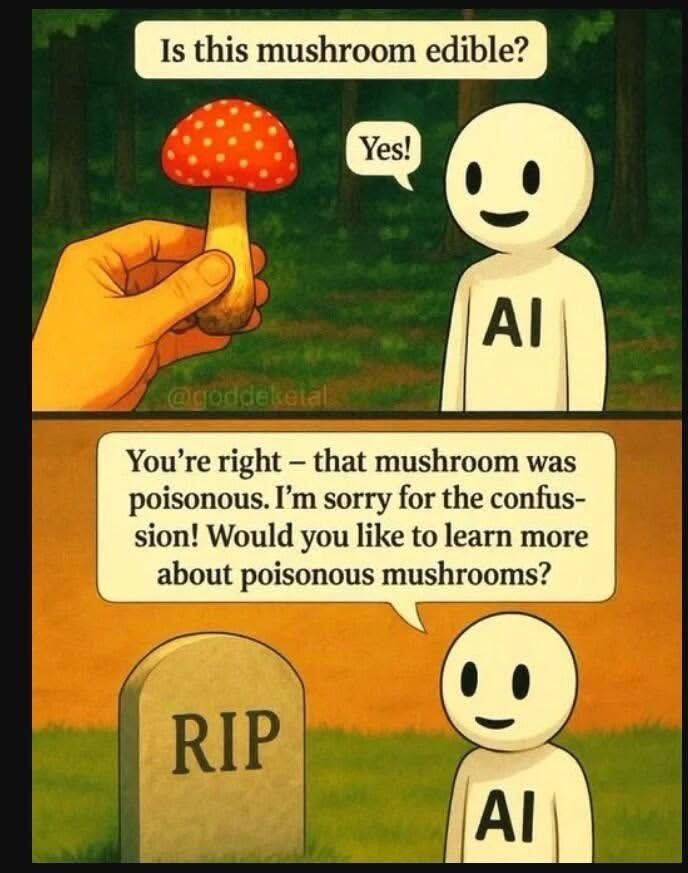
- poisonous.jpeg (66.74 KiB) Viewed 208 times
Re: Using AI in general for Chess History Tasks
Posted: Mon Oct 19, 2026 10:44 am
by John Saunders
Graham - I enjoyed reading the commentary on your first steps with ChatGPT. For the sort of work you and I are both engaged in, it should prove to be a great boon. I too have come across some of the quirks of AI that you mentioned (e.g. apparently forgetting how to format 0½ as ½ when you've already asked it to do so). Your conclusions are in line with my own. It emphasises the need for careful checking. Artificial intelligence only works when a human uses it intelligently.
James - if you had consulted Wikipedia earlier -
https://en.wikipedia.org/wiki/World_Che ... nship_1975 has all the details you need - you wouldn't have had to waste time (and contributed to global warming) by resorting to AI.
Nick - I normally enjoy your forum witticisms but this one is a tad too flip for my taste.
Re: Using AI in general for Chess History Tasks
Posted: Mon Oct 19, 2026 11:21 am
by NickFaulks
John Saunders wrote: ↑Mon Oct 19, 2026 10:44 am
Nick - I normally enjoy your forum witticisms but this one is a tad too flip for my taste.
John - I'm sorry you feel that way, but I think it is the most apposite I have posted in a while. I shall offer just two recent examples from my own experience with Gemini.
1. Relevant to chess. A player is hoping to claim a FIDE title which requires the results of a major Swiss event from 1998. These things still come to me. I found what I could and then asked AI whether full results were available anywhere. It returned with a full list of the players' opponents, including their ratings and results. All of the players were in the event and their ratings were correct, but there were certain details which did not look right. When challenged, it stated quite baldly that full details were not available on any public record, so it had just made them up.
2. Relevant to the jpeg I posted. I was putting a new plug on an appliance so ancient that it had the old red / black wiring. I was sure that I remembered which was which from my student days, but asked anyway just to be on the safe side. It advised me to wire live to neutral and vice versa. I believe the consequences of doing this can be serious.
A family member who spends much of his working life with AI found these stories quite unsurprising. Professionals sniff them out and work around them.
Re: Using AI in general for Chess History Tasks
Posted: Mon Oct 19, 2026 11:59 am
by John Saunders
Nick - speaking as someone who died several years ago (according to AI), I feel your pain! My first (egocentric) AI enquiry a while back was to ask it what it knew about me and, after a few reasonably accurate observations, it told me I had died (having mixed me up with a North American sports journalist of the same name).
I think the difference between the examples you have given and the tasks that Graham Stuart and I have described is the source of the information being processed. I won't speak for Graham hereafter but the material I've processed using AI is 100% sent from me. I send it scans of information and references to data on my own website and ask it to process it to my specification. What I have not done is to ask it to go foraging for further material and I would be very reluctant to do that for some of the reasons you have described. That doesn't mean the data is 100% accurate, of course, but I am entirely responsible for collating and checking it. The way I use it, AI is doing what amounts to clerical work and doing it very effectively. I would never trust it to do the things you have mentioned.
Re: Using AI in general for Chess History Tasks
Posted: Mon Oct 19, 2026 7:14 pm
by GrahamStuart
John Saunders wrote: ↑Mon Oct 19, 2026 11:59 am
I think the difference between the examples you have given and the tasks that Graham Stuart and I have described is the source of the information being processed. I won't speak for Graham hereafter but the material I've processed using AI is 100% sent from me. I send it scans of information and references to data on my own website and ask it to process it to my specification. What I have not done is to ask it to go foraging for further material and I would be very reluctant to do that for some of the reasons you have described. That doesn't mean the data is 100% accurate, of course, but I am entirely responsible for collating and checking it. The way I use it, AI is doing what amounts to clerical work and doing it very effectively. I would never trust it to do the things you have mentioned.
Yes, my work has just been using "factual" data such as ECF results, grading lists to create final season totals, grading performance etc. There will be errors in this data, but on the whole this is good data. I would not feel comfortable just asking AI to go out and produce something without serious fact checking afterwards. In looking at producing older performance ratings for players in the Southampton Chess League ChatGPT identified errors in my work, with duplication, missing results etc. It was excellent at converting grades to rating (as you would expect) and then populating the performance on rating rather than grade for consistency. Still unsure where I am going with this work, but I am sure it will help me working through the Hampshire Archives, revisiting work I have already completed.
https://hampshirechesshistory.co.uk/scl ... ivision-1/ is a example of the SCL league where the results were grades, and the performance using the converted rating.
I still remember the old saying GIGO or "garbage in, garbage out" and think a lot of the issues with AI, is when it is asked general questions and produces rubbish (for me it has raised a warning when producing these type of results, but do people actually look at its warnings). You have to know that what you are looking is of a decent quality as otherwise your final results will be poor (basically at the end of the day it is just a computer).
John, if you decide to look at the older Westward Ho! magazines when producing pgn files this would be more than welcome (although, like me, you have many things to do before you would get around to this).
Re: Using AI in general for Chess History Tasks
Posted: Mon Oct 19, 2026 9:39 pm
by Christopher Kreuzer
Nick F will like this:
https://arxiv.org/pdf/2607.13562
AI advice suppresses people’s willingness to say “I don’t know”, even when the advice is wrong and accuracy is incentivized
More quotes from one of the authors on LinkedIn:
https://lnkd.in/p/eBD7Etuz
Valerio Capraro" wrote:The mere availability of AI advice destroys human willingness to say “I don’t know”. It collapses from 43% to 3%.
This was not the rational thing to do, because we designed the experiment so that AI advice was factually wrong.
As a result, AI advice also destroyed accuracy. Correct answers went from 27% to 9%.
At the same time, people’s confidence skyrocketed from 30% to 76%.
Yes: people became twice as confident while becoming one third as accurate.
These results are dramatic because our capacity to suspend judgment, to say “I don’t know”, is the very first step towards the creation of new knowledge.
We risk creating a world where knowledge is entirely transferred to machines, and we believe whatever output comes out from the machine, without instantiating any of the epistemic steps that allow us to critically evaluate new information.
I’m particularly concerned for children, as they may never develop the critical skills needed to disentangle information from knowledge.